

Tarantula in a Train Car
In 1900, the New York Times ran a rather quaint story about a man who found a tarantula on a train in New York. Spurred by warnings of the tarantula’s lethality, the anonymous man threw the spider under the train, squashing it. It’s not a particularly interesting story, except for one key detail: while the man is unnamed, he is described as wearing a “seersucker coat.”
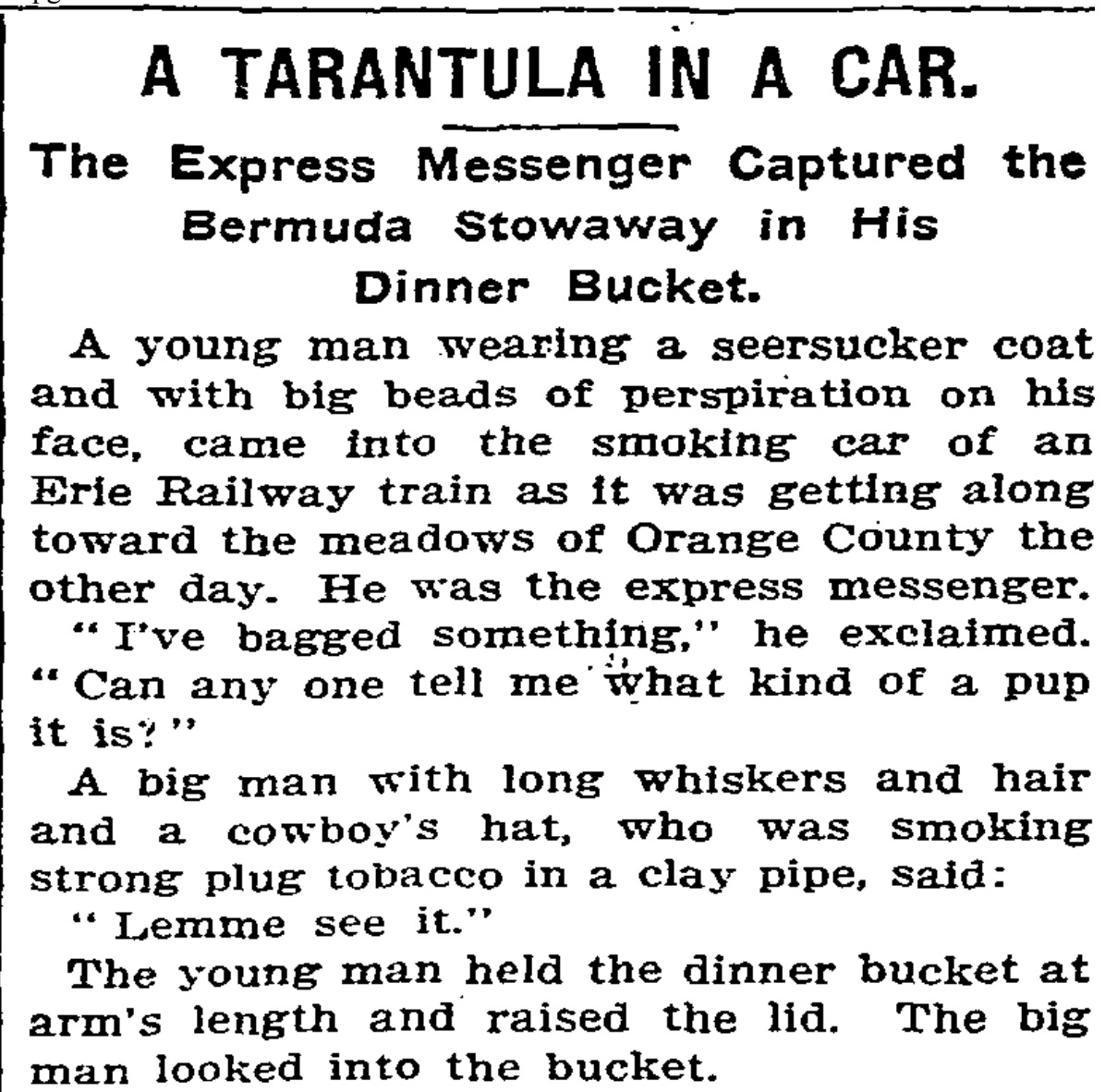
New York Times, Sept. 1900
What’s interesting here is the date. This happened nine years before Joseph Haspel allegedly invented the seersucker suit at his shop in New Orleans. Of course, a coat is not a suit, but the story of the train-car tarantula is one of many historical facts that serve to challenge the oft-told legend of the South’s most quintessential garment.
The legend, recounted on Wikipedia and a myriad of fashion blogs, goes something like this. Seersucker is a fabric of Indian origin whose English name is a corruption of the Persian/Hindi (I’ve seen both languages credited) words for milk and sugar. The fabric gained popularity with British colonizers whose tweeds and oxford cloths were ill suited to hot climates.
Eventually, the fabric made its way to the New World where it was primarily a blue-collar garment. Workers liked that it didn’t need to be ironed, was relatively cheap, and, of course, kept them cool. Railwaymen and factory workers are particularly famous for having worn the fabric, but it also ended up on nurses and soldiers at various points in history.
In 1909, Joseph Haspel of New Orleans “invented” the seersucker suit, which quickly became a Southern staple. Soon, trendy and ironic Ivy-League types up north started incorporating the fabric into their wardrobes, cementing it as a near-universal menswear staple. The final thing usually mentioned in this story is Seersucker Thursday, a day in June where US Senators are encouraged to wear seersucker suits.
But this story, while not strictly inaccurate, is at least incomplete. Lydia Blackmore, writing for the Historic New Orleans Collection, does a good job discussing the early-American history of the fabric. By combing through newspaper archives, Blackmore was able to pinpoint some of the fabric’s earliest mentions. While the broad strokes of the typical seersucker origin story are more or less true, seersucker’s rise from railyard to Congress is actually more striking than it appears.
How Times Change
As Blackmore notes, the fabric was initially imported to the US in the 18th century as much for curtains and bedding as for clothing. However, some of the earliest mentions of seersucker as clothing come not from textile advertisements or shipping manifests, but rather from more grisly affairs. In 1821, for example, seersucker and madras were listed as fabrics worn by a runaway slave named Mary-Jeanne.
Seersucker suits, as opposed to workwear, started appearing in advertisements in the late 19th century—decades before Haspel allegedly invented the garment. Yet, despite his exaggerated role in the garment’s invention, Joseph Haspel still serves as a useful demarcation point for seersucker enthusiasts.
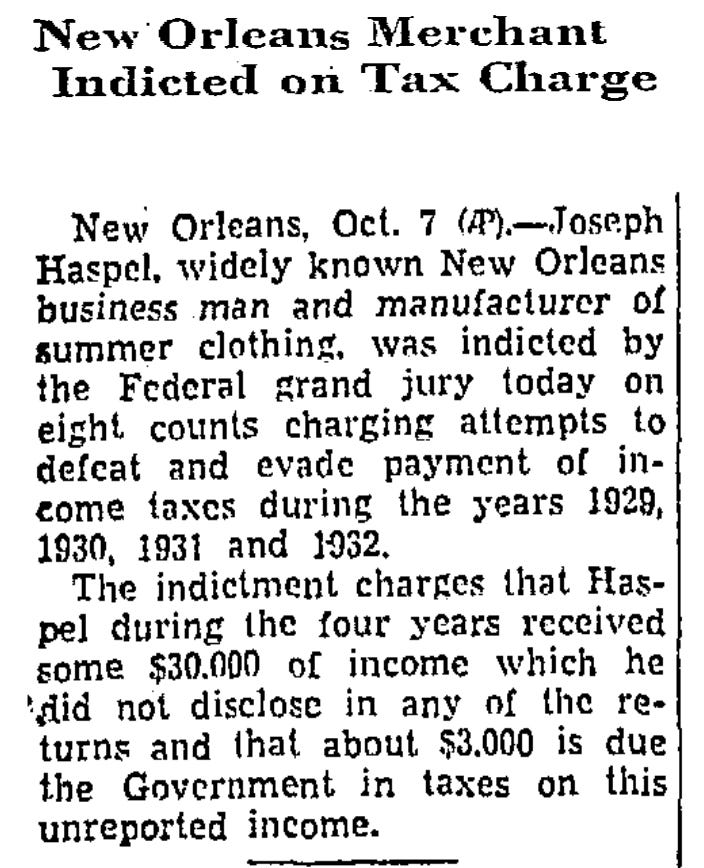
The Washington Post, 1935
Looking again at newspaper archives, it’s possible to figure out the exact date when seersucker transitioned from blue collar to white collar: 1935. This is the year Joseph Haspel was indicted on eight counts of tax evasion. The Washington Post article on the indictment describes Haspel as a “manufacturer of summer clothing,” but, unlike the tarantula story, the article makes no mention of his arraignment attire. Still, this is likely the earliest-recorded example of seersucker being associated with white-collar, rather than blue-collar, crime. From there, it’s a straightforward path to the country club, the Ivy League, and the Senate.
How seersucker found its way from the backs of enslaved African Americans to the backs of presidents and senators is not itself a unique story (see, denim). The intrigue comes instead from how common of a story this is in American fashion. A fabric emerging from coal mines and shipyards and winding up in high-rise offices embodies the rags-to-riches narrative that is so central to the American identity.
But also central to the American identity is the impulse to assign credit for large social phenomena to a singular person. Joseph Haspel deserves some credit for the seersucker suit’s popularity, but it’s likely actors such as Gregory Peck and Andy Griffith that played at least an equal role in the garment’s mainstream appeal. But everybody loves a visionary, especially in the fashion world.
Regardless, what makes seersucker’s rise special is another strange trend in fashion. As the fabric transitioned from workaday garb to highfalutin attire, it also lost something of its essence. Any cooling benefit one is likely to receive from the fabric is minimal once the material is fashioned into a coat — especially if that coat is worn over a regular cotton shirt. But, perhaps, this is kind of the point. Just as lawns once signaled wealth by demonstrating their owners had no need for subsistence farming, wearing a coat made out of a cooling fabric sends a similar message.
What’s undeniable is seersucker’s aesthetic appeal. Those blue and white stripes are iconic, and, even without their storied history, would have likely been enough to keep generation after generation cool in their coats.