

When was the last time you wore a tuxedo? For most people, myself included, the answer is either a themed party of some sort or a wedding. This is a garment that is heavily antiquated in its most classic form, but remains a staple on the lists I see of “things men must have.” While I do agree that every man should have a tuxedo, those in the know are aware that the garment can be leveled up in so many interesting ways; this unfortunately goes unexplored by the masses. My favorite way to do so is a jacket different from that of classic black. Take this one for example: a 1960s ivory tuxedo jacket.
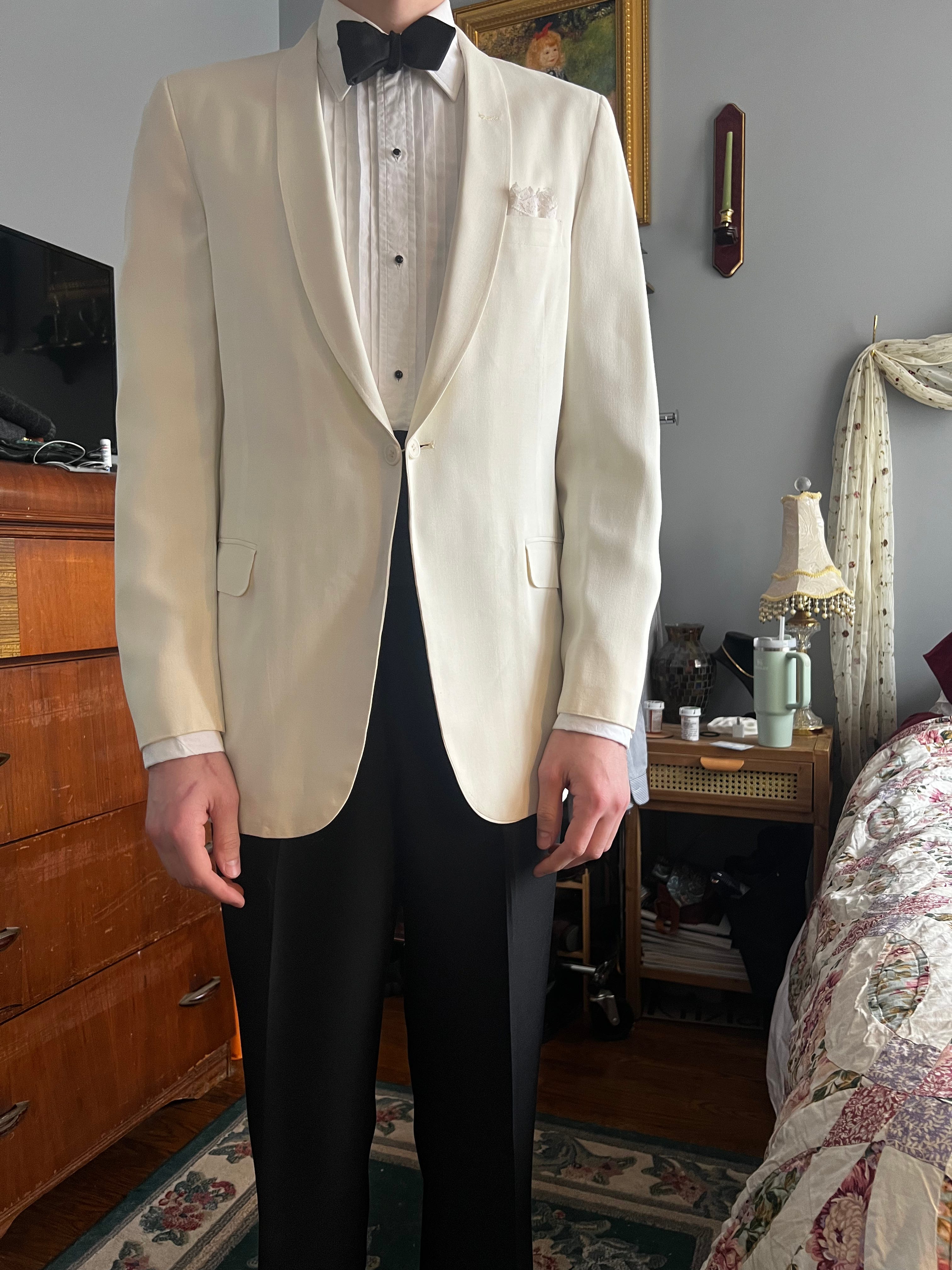
This jacket is my most prized possession, and came to meet my eyes unexpectedly on eBay from a seller who had absolutely no idea what they had. Listed merely as “vintage white tuxedo jacket” followed by several buzzwords to feed the search algorithm. This listing didn’t even have an actual picture of the jacket until the third image, starting with 2 modern images from a J. Crew lookbook. If you’re a frequent secondhand online shopper, you know that with listings like this, whatever was inside either contained solid gold or complete garbage. Luckily, it was the former.
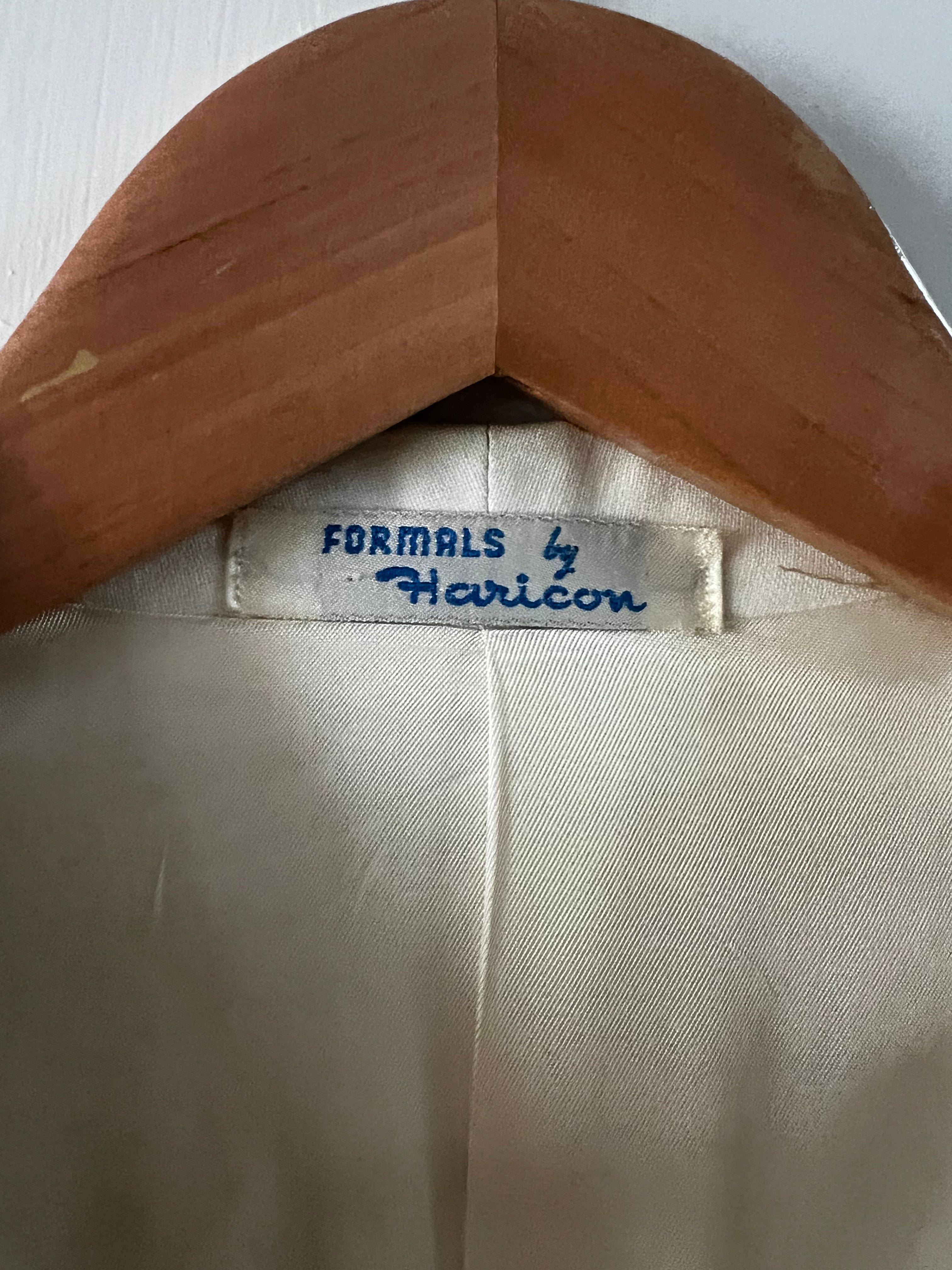
While the ivory jacket originated in the 1930s in classic bellied lapel styles like those found in Casablanca, all the hallmarks of 1960s tailoring and formalwear are featured in this jacket. The extra slim lapels instantly date it to the 60s, as does the ventless back (my favorite detail). Made with hot weather travelers exploring the globe to black tie summer gatherings in mind, this jacket is unstructured and extremely lightweight. While I cannot be certain of the material mix, my best guess is an 80%/20% wool-linen blend. The fabric is of supreme quality and extremely soft to the touch, as was more standard in the 60s. Another distinct detail from the period is the lower-than-average buttoning point. Many tuxedos throughout history and even today have higher buttoning points than normal suits, as it is perceived as more “buttoned up” and therefore formal. I believe this low buttoning elongates the silhouette and helps slim the figure, as does virtually all 60s tailoring. A final interesting detail is the double button, which is quite unusual throughout any 20th century tailoring, formal or not. It creates a distinct look and is a fantastic vintage detail.


I have personally worn this jacket a few times: once to a concert hosted by a friend, once to a Halloween party as 007 himself, and it is on the docket a third time for a summer wedding coming up in May. While we at TNBC generally believe it is best to stick to the classic details, the relaxed nature of the ivory jacket allows for a little bit of personality to show in the outfit. I will be wearing this with most of the classic black tie details: cummerbund, satin bow tie, and black formal pants. No doubt that the patent leather loafers would look fantastic, but I’m opting for two-tone penny loafers to help summer up the look a bit. I have two pant options for this jacket: a more classic, wide leg version that belongs with a 1950s Palm Beach jacket, or a slimmer, bootcut variant from the 1970s that I found thrifting without its matching jacket. I feel the 70s pair is a bit more of a congruent look for the time with the jacket; let me know which you prefer.


An interesting familial connection I didn’t make until after I got this jacket was that my grandfather wore almost exactly what I’m wearing in this article for his wedding in 1960. While celebrating their 65th wedding anniversary this past May, my grandparents showed the family their wedding album and I immediately noticed my grandfather’s pristine white jacket in nearly the exact same style. It has the same low buttoning point and slim lapel which fit his slender frame (fortunately passed down to my father and me) perfectly and emphasized the lost elegance of the era. A style icon to this day, you can find him at all family gatherings in thick wale corduroy pants, a plush flannel older than me, and brown tassel loafers that have been repaired or resoled more times than any of us can count.


I’m afraid he may have worn it better.
Do you have any tips for finding a classic tuxedo on eBay? What should I search and what should I be looking for?
You look impeccable. And you obviously understand that silver, *not* gold, is the proper metal for formal wear.